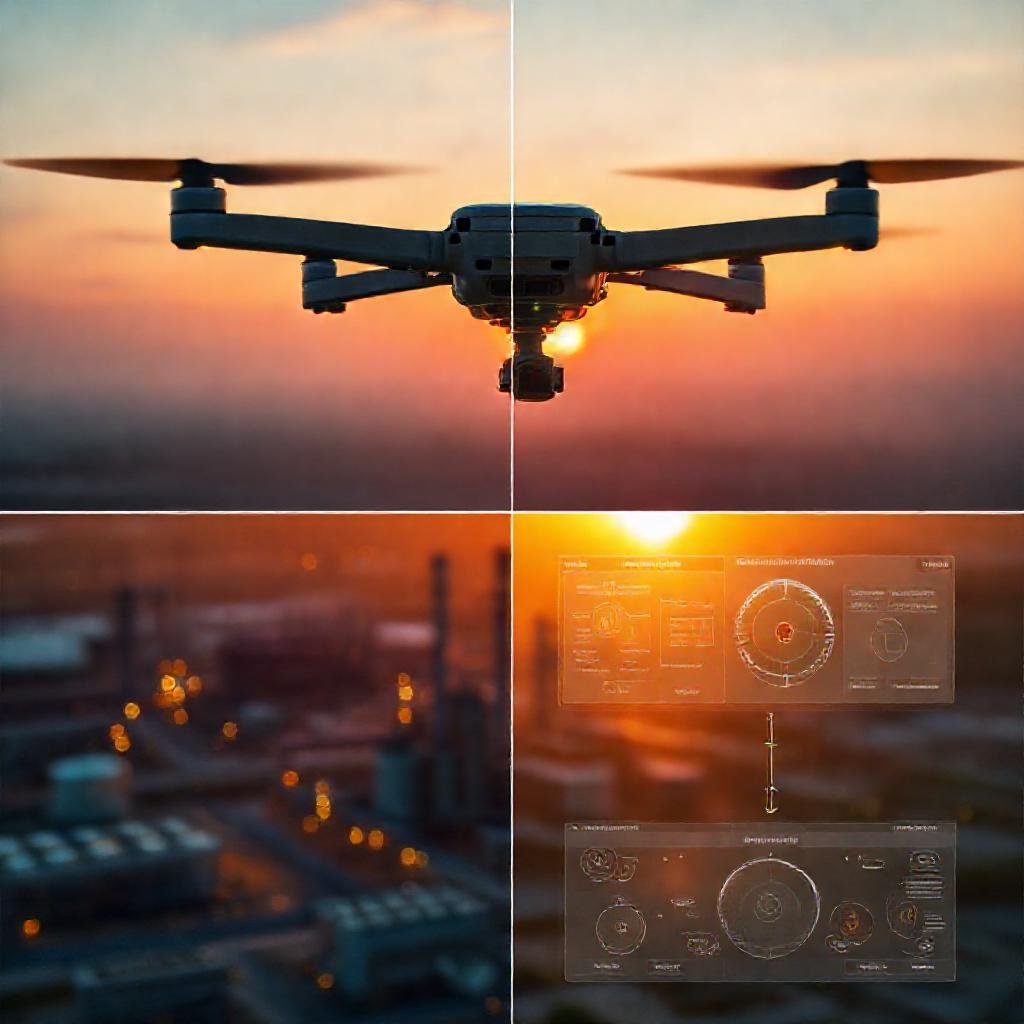
AI Drones: How Artificial Intelligence Is Redefining Flight, Safety, and Operations
Turn data into decisions with AI-powered drone intelligence.
Introduction: Why AI Drones Matter Now
AI drones are no longer limited to research labs or flashy demos. They’re becoming practical tools for inspection, public safety, mapping, agriculture, logistics, and industrial monitoring—because artificial intelligence helps drones do more than simply fly and record. With AI, a drone can understand what it sees, classify objects, follow intelligent routes, detect anomalies, and support faster decisions in the field.
What makes AI drones different from “traditional” drones is the shift from pre-programmed behaviors to adaptive intelligence. Instead of relying only on GPS waypoints and remote piloting, AI-enabled systems can interpret sensor inputs (camera, radar, thermal, LiDAR, microphones, GPS/IMU data) to make real-time operational choices. That capability directly impacts safety, productivity, and the quality of outcomes—especially in complex or time-sensitive environments.
What Is an AI Drone?
An AI drone is an unmanned aerial vehicle equipped with artificial intelligence to perceive its environment and make decisions either onboard or via a connected system. While every AI drone varies by manufacturer and use case, most share common components:
- Sensing stack: Cameras (RGB), thermal sensors, multispectral sensors, LiDAR or radar, and navigation sensors like GPS/IMU.
- Compute: Edge AI processors for low-latency inference, plus optional cloud support for training or heavy analysis.
- AI models: Computer vision, object detection, segmentation, tracking, anomaly detection, or navigation planning models.
- Autonomy layer: Flight control logic that translates AI outputs into safe motion commands.
- Data pipelines: Methods to store results, generate maps, create reports, and integrate with enterprise systems.
The result is a drone that can act on information—not just capture it.
How AI Drones Work: From Sensors to Decisions
Understanding the workflow helps organizations evaluate performance honestly and set realistic expectations. A typical AI drone pipeline looks like this:
1) Perception: Interpreting Visual and Sensor Data
Drones “see” through sensors. AI models then interpret what those sensors capture. For example, computer vision can detect cracks on concrete, locate roof defects, identify vehicles, or track people. Thermal imaging can flag hot spots in industrial facilities. Multispectral sensors can support crop health analysis.
2) Understanding: Classification, Tracking, and Segmentation
Perception is rarely enough on its own. AI models often go further to classify objects (e.g., “person,” “vehicle,” “smoke-like anomaly”), segment regions (e.g., outlining damaged areas), and maintain tracking across frames. This continuity improves accuracy for longer missions and complex scenes.
3) Decision-Making: Planning Routes and Actions
Once the drone recognizes meaningful features, it can plan actions. This might include:
- Repositioning to get a better view of a detected defect
- Following a safe route around obstacles
- Triggering a recording mode when an anomaly is detected
- Changing altitude or speed to improve data quality
4) Safety Controls: Guardrails for Real-World Environments
Even the best AI needs safety constraints. Effective systems include geofencing, obstacle avoidance, fail-safe behaviors (return-to-home, hover, controlled landing), and rule-based limits that prevent the AI from making dangerous moves. This blend of autonomy and safeguards is essential for operational reliability.
Key AI Capabilities in Modern Drone Systems
AI drones are adopted for different reasons, but several capabilities show up repeatedly across industries.
Computer Vision for Inspection and Quality Control
AI-driven vision helps identify defects that humans might miss in large volumes of imagery. Depending on the task, models can detect:
- Surface cracks, corrosion, and delamination
- Missing components or misalignment
- Safety hazards (e.g., debris near critical infrastructure)
Autonomous Navigation and Obstacle Avoidance
In dynamic environments, the value of AI is responsiveness. Using perception inputs, drones can avoid obstacles, adapt to moving objects, and follow intelligent coverage patterns (such as ensuring consistent overlap for mapping).
Anomaly Detection and Predictive Signaling
Instead of only identifying known objects, AI can flag “something is off.” For example, a system can compare incoming sensor readings to expected patterns—alerting teams to unusual thermal signatures, atypical shapes, or unexpected changes over time.
Edge AI for Low-Latency Operations
Many AI drones run models directly on the device to minimize delay. This is critical for fast decisions like obstacle avoidance and immediate safety reactions. Cloud processing may still play a role for training, analytics, or large-scale reporting, but edge inference makes the system practical in the field.
Where AI Drones Are Being Used (Practical Use Cases)
AI drones show up wherever aerial data must be transformed into actionable outcomes quickly. Here are common, real-world categories.
Industrial Inspection and Asset Monitoring
Energy, manufacturing, and utilities often use drones to inspect infrastructure such as pipelines, power lines, storage tanks, and industrial structures. AI improves the process by automatically highlighting regions that need attention and reducing manual review time.
Search and Rescue and Public Safety
In emergencies, time matters. AI drones can assist by scanning for people, assessing terrain, and locating areas of interest. Thermal sensors and object detection can help narrow down where responders should focus first.
Mapping, Surveying, and Construction Progress
For planning and reporting, drones capture imagery that must be turned into maps or measurements. AI can improve consistency in flight planning and can accelerate analysis by identifying relevant features and reducing repetitive human labeling.
Agriculture and Precision Farming
AI-driven analysis of multispectral and thermal imagery supports decisions about irrigation, crop stress, and field management. The drone becomes a tool for ongoing monitoring rather than a one-time survey.
Security and Perimeter Monitoring
AI can enhance monitoring by detecting objects of interest and distinguishing between benign activity and potential threats. However, this requires careful governance to avoid false alarms and to ensure responsible use.
Benefits: What Organizations Gain with AI Drones
When deployed properly, AI drones offer tangible operational improvements.
- Faster analysis: AI can pre-process imagery and highlight critical areas immediately.
- More consistent results: Automated detection can reduce variability between different operators.
- Improved safety: AI-controlled obstacle avoidance and guardrails reduce risk in complex environments.
- Lower inspection cost: Reduced reliance on time-intensive manual inspections can improve ROI.
- Better data utilization: AI transforms raw imagery into structured outputs that integrate with workflows.
To understand how safer workflows and smarter systems relate across industries, you may also find it useful to explore Technology Today: Building Safer Workflows and Smarter Systems.
Challenges and Risks: What to Plan For
AI drones are powerful, but they also introduce new technical and operational challenges. A responsible adoption strategy accounts for these risks upfront.
Model Performance Can Vary by Environment
A model trained on one type of lighting, terrain, or camera configuration may underperform in another. Weather, shadows, seasonal changes, and sensor differences can all affect accuracy. This is why validation in your target conditions is essential.
False Positives and False Negatives
AI detection is not infallible. False positives waste time; false negatives can lead to missed hazards. Many successful deployments use AI as an assistant—pairing automated alerts with human review and escalation rules.
Data Privacy and Ethical Use
Drones often collect imagery of locations where people and private property may appear. Organizations must handle data responsibly, including access controls, retention policies, and clear consent practices where applicable.
Security Concerns: From Device to Data
Like any connected system, drone platforms can be targets for misuse. Risks include unauthorized access, manipulation of data streams, and tampering with firmware or configuration. Security should be treated as part of the design—not an afterthought.
For a broader view of how innovation shapes security and societal impact, see Technology in 2026: How Innovation Shapes Security, Workflows, and Society.
Regulation and Compliance: The Practical Reality
Rules for drone operations vary by country and by mission type. AI does not eliminate the need to comply with airspace regulations, safety requirements, and privacy laws. In practice, organizations should plan for:
- Operator licensing and training: AI can assist, but human accountability remains.
- Airspace permissions: Where you can fly matters as much as how you fly.
- Operational limits: Altitude, proximity to people, and permitted use cases.
- Data governance: Policies for storage, access, and sharing.
When deploying AI drones at scale, internal compliance processes are as critical as the technology itself.
How to Choose the Right AI Drone for Your Needs
The “best” AI drone is the one that matches your operational requirements, environment, and workflow integration. Consider these decision factors.
1) Define the Output You Need
Start with the deliverable: annotated images, defect maps, object counts, thermal anomaly lists, or progress metrics. Clear outputs reduce misalignment between engineering teams and business stakeholders.
2) Match Sensors to the Task
- RGB cameras excel for visual inspection and classification.
- Thermal sensors help with heat-related anomalies.
- Multispectral sensors support crop health and vegetation analysis.
- LiDAR/radar can improve 3D perception in challenging conditions.
3) Evaluate Edge vs. Cloud Processing
For missions requiring fast reactions, edge AI is usually preferred. For large-scale reporting, cloud tools may offer scalability. Many systems use a hybrid approach.
4) Check for Robust Safety Features
Look for obstacle avoidance, geofencing, reliable failsafes, and documented flight behavior under signal loss. These are often more important than raw model accuracy, especially for first deployments.
5) Consider Workflow Integration
AI is most valuable when it fits into existing operations—maintenance systems, GIS tools, ticketing workflows, or compliance documentation. If teams can’t consume results easily, the technology won’t deliver full value.
Adoption Best Practices: Deploy AI Drones Responsibly
Organizations that succeed typically treat AI drones like operational systems, not standalone gadgets.
Start with a Limited Pilot
Choose one high-value use case and evaluate performance against clear criteria—accuracy, repeatability, uptime, and time saved. Use real conditions, not just controlled tests.
Build a Feedback Loop
Create a process for handling uncertain results. For example:
- When the model confidence is low, route to human review.
- Store corrected results to improve future runs.
- Track failure cases by environment type (lighting, weather, distance).
Document Operational Procedures
Document standard operating procedures, including pre-flight checks, safety checks, and escalation steps for unexpected behaviors. This reduces risk and improves training consistency.
Invest in People and Training
AI drones change the skill mix. Operators still need flight discipline, but teams also need basic understanding of AI limitations, data handling, and verification practices.
If you’re thinking about how systems fit performance requirements in work and digital contexts, consider reading Fit for Performance and Design: A Modern Guide to “Fit” in Health, Work, and Digital Systems. The same “fit” mindset applies when aligning drone capability with operational goals.
The Future of AI Drones: What to Expect Next
AI drone development is moving quickly, but progress will likely focus on reliability, safety, and usability. Expect improvements in:
- Better on-device perception: More robust models for varied lighting and weather.
- Higher autonomy with stronger guardrails: Safer navigation in cluttered areas.
- More explainable outputs: Clearer reasoning for alerts and classifications.
- Greater workflow integration: From capture to reporting, with less manual stitching.
- Stronger governance: Improved security controls, audit trails, and privacy safeguards.
As these trends continue, AI drones will increasingly operate as decision-support tools—helping organizations act sooner and with greater confidence.
Conclusion: AI Drones Are Turning Flight into Intelligence
AI drones represent a meaningful shift in how we capture and interpret the world from the air. By combining sensors, edge or cloud intelligence, and safety-first autonomy, they move beyond simple recording into real-time insight and actionable reporting.
However, adoption requires more than purchasing hardware. Success depends on matching sensors and models to your environment, validating performance with real missions, integrating outputs into existing workflows, and ensuring compliance and data governance. Organizations that approach AI drones as an operational system—supported by training and feedback loops—can unlock the full value of smarter, safer aerial work.
FAQ: AI Drones
Are AI drones fully autonomous?
Not always. Many AI drones support advanced autonomy (like obstacle avoidance and intelligent detection), but human oversight is commonly used for verification, compliance, and exception handling.
Do AI drones require internet access?
Some functions rely on onboard (edge) processing for low latency, while others use cloud services for training or heavy analytics. The right approach depends on the mission and connectivity environment.
What industries benefit most from AI drones?
Industries that need fast aerial inspection and structured reporting often benefit—such as utilities, construction, agriculture, public safety, logistics, and enterprise security.
How do we reduce errors from AI detection?
Use pilot testing in your real environment, validate model outputs, implement confidence thresholds for human review, and maintain a feedback loop to improve processes over time.
What about privacy when using AI drones?
Handle data with clear retention and access policies, limit collection where possible, follow local regulations, and ensure appropriate security controls for stored imagery and analytics outputs.