Technology in 2026: How Innovation Shapes Security, Workflows, and Society
Build smarter, safer, and more resilient systems with today’s technology.
Technology is no longer just a set of tools—it’s the infrastructure behind how we communicate, work, learn, and make decisions. In the last few years, innovations like cloud computing, artificial intelligence, the Internet of Things (IoT), and advanced cybersecurity have accelerated at a pace that affects nearly every industry. But the real story isn’t only about new capabilities; it’s about how organizations design workflows, protect data, and build resilient systems that can withstand both everyday disruption and emerging threats.
This article takes a practical, professional look at technology in 2026—covering the major trends, the architecture behind modern platforms, and the operational choices that determine whether innovation delivers value. Along the way, we’ll connect technology fundamentals to real-world implementation, including considerations for long-term digital preservation and governance.
The Technology Stack Today: From Devices to Decision-Making
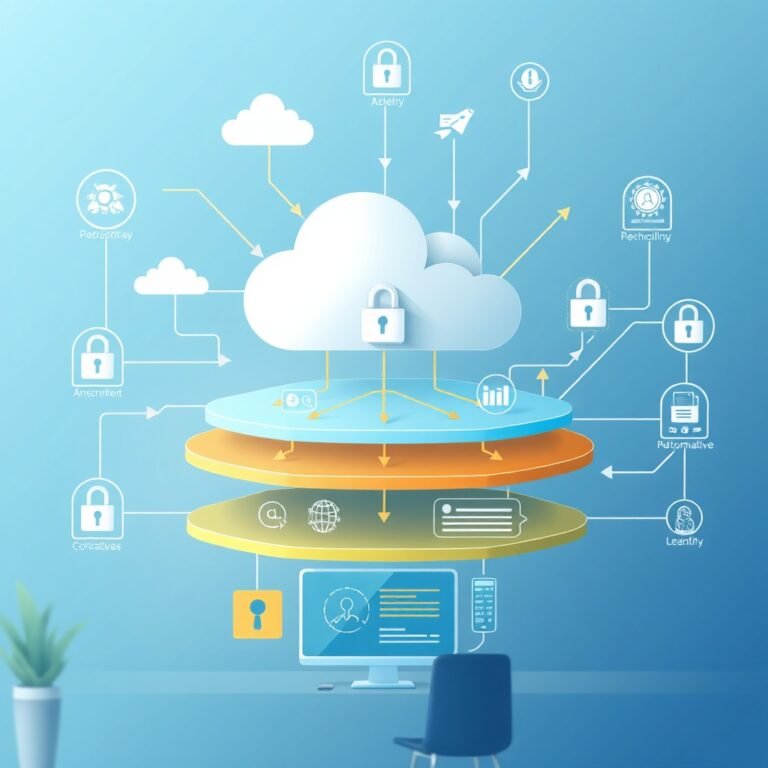
Modern technology systems are interconnected across layers: sensors and user interfaces, data platforms, application services, and the security controls that protect them. Understanding these layers helps teams plan integrations without creating fragile systems or unnecessary risk.
1) Edge and IoT: Data Comes from Everywhere
IoT technologies collect signals from physical environments—machines, vehicles, buildings, and consumer devices. “Edge computing” places processing closer to the source, reducing latency and minimizing the amount of raw data sent to central systems.
- Lower latency: Edge processing can respond in milliseconds for monitoring and control.
- Bandwidth efficiency: Instead of streaming everything, systems send events or summaries.
- Resilience: Local fallbacks can keep critical features running even if connectivity drops.
2) Cloud Platforms: Scale, Speed, and Shared Services
Cloud computing remains the backbone for elasticity—scaling resources up or down based on demand. But cloud adoption also introduces governance challenges: identity management, access control, network segmentation, cost control, and configuration hygiene.
Organizations typically benefit from using cloud as a combination of infrastructure and managed services, such as databases, event queues, and analytics engines. The key is balancing speed of development with operational reliability.
3) Data and Analytics: Turning Signals into Insight
As data volume grows, technology teams must define how data is captured, validated, stored, and accessed. Effective analytics depends on data quality, consistent schemas, and clear ownership. Many organizations move toward data platforms that support both batch and real-time processing.
4) AI and Automation: From Assistance to Augmented Workflows
Artificial intelligence is increasingly embedded into business processes. Rather than treating AI as a standalone product, companies use it as an augmentation layer—helping with classification, forecasting, search, anomaly detection, and decision support.
Responsible AI design focuses on:
- Clear objectives: Define the business problem before selecting models.
- Human oversight: Ensure review processes exist for high-impact outcomes.
- Model monitoring: Track performance drift and data changes over time.
Cybersecurity as a Core Technology Requirement
As technology expands, attackers do too. Security can’t be an afterthought; it must be built into architecture. In practice, strong cybersecurity aligns identity, network controls, application security, and operational processes.
Threat Landscape: Why Risk Has Changed
Modern attacks often blend multiple techniques: credential theft, phishing, misconfigurations, supply-chain weaknesses, and exploitation of exposed services. Because cloud environments and third-party integrations increase complexity, security teams need visibility across the full system.
Security-by-Design: Practical Measures That Work
Rather than relying on one tool, organizations benefit from layered defenses:
- Identity and access management: Use least privilege and role-based access patterns.
- Secure configuration baselines: Standardize settings to reduce misconfiguration risk.
- Encryption in transit and at rest: Protect data from interception and unauthorized access.
- Application security testing: Integrate scanning and reviews into CI/CD pipelines.
- Logging and detection: Monitor behavior patterns, not just known signatures.
Resilience and Recovery: Preparing for the Inevitable
No matter how strong defenses are, incidents can happen. Technology teams should ensure the ability to recover quickly:
- Backups and restore testing: Validate recovery paths—not just backup existence.
- Incident response playbooks: Define ownership, communication flows, and containment steps.
- Business continuity planning: Keep critical services reachable during disruptions.
Modern Software Delivery: Automation, Reliability, and Efficiency
Technology progress is also about how we build and operate systems. Continuous integration and continuous delivery (CI/CD), infrastructure automation, and observability tools have become standard expectations for teams that want dependable releases.
CI/CD and Infrastructure as Code
CI/CD pipelines enable consistent builds and repeatable deployments. Infrastructure as code (IaC) helps teams manage environments the same way they manage application code: versioned, reviewed, and auditable.
When implemented well, these practices support:
- Faster delivery: Reduce time between idea and release.
- Fewer configuration errors: Standardize environments.
- Traceability: Track what changed and why.
Observability: Knowing What’s Happening in Real Time
Observability goes beyond basic monitoring. It combines metrics, logs, and traces to understand performance and diagnose failures. In distributed systems, where a single user action may involve many services, observability reduces mean time to recovery.
Governance and Compliance: Turning Technology into Trust
As organizations use data more extensively, they must align technology decisions with governance requirements. Compliance isn’t only about passing audits; it’s about building trustworthy processes.
Data Governance: Ownership, Quality, and Access
Strong governance defines who owns data, what “good quality” means, and how access is granted. It also includes retention policies—what to keep, for how long, and how to dispose of it securely.
Risk Management for Integrations
Modern systems are rarely standalone. Third-party services, APIs, and plugins can introduce new vulnerabilities or data exposure pathways. Teams should evaluate:
- Security posture: How the vendor handles vulnerabilities and patching.
- Data handling: Where data is stored and how it’s processed.
- Operational dependencies: What happens if an external service becomes unavailable.
Responsible Innovation: Building with Humans in Mind
Technology that improves productivity should also consider usability, fairness, and long-term maintainability. In many environments, the fastest solution can become the most expensive once it’s difficult to maintain or causes user confusion.
Designing for Usability and Adoption
A system is only effective if it’s usable by real teams. Clear workflows, consistent interfaces, and meaningful feedback loops help reduce friction and ensure adoption.
AI Governance: Practical Controls for Real Use
AI introduces unique risks, such as biased outcomes, unclear explanations, and unreliable performance when input data changes. Practical governance includes:
- Dataset documentation: Know the origin and characteristics of training/validation data.
- Evaluation plans: Measure quality using criteria that match the intended use.
- Fallback behaviors: Define what the system should do when confidence is low.
Digital Preservation and Long-Term Thinking
When technology teams deploy systems to support organizations, they’re also building the future archive of knowledge—files, records, content, metadata, and context. Long-term preservation requires more than storing data; it requires maintaining the ability to interpret and access it.
Preservation becomes especially important when technology supports cultural, institutional, or historical assets. For example, the way digital documentation is structured—formats, metadata, and references—can determine whether information remains accessible years later. If your work involves documenting heritage or long-lived content, consider building preservation into your workflow from day one.
To see how digital preservation thinking can intersect with technology projects, you may find it useful to explore how architectural records, design intent, and digital documentation methods come together in long-term strategies: Sultanate Architecture: Masterpieces of Power, Design, and Digital Preservation.
Sustainability in Technology: Efficiency Is an Innovation Advantage
Energy use and compute demand have become major considerations in modern technology planning. Sustainable computing is not just about hardware; it includes how systems are designed, provisioned, and optimized.
Where Sustainability Improves Performance
- Right-sizing resources: Avoid over-provisioning and reduce idle compute.
- Efficient data pipelines: Process what’s needed, when it’s needed.
- Lifecycle management: Retire unused services and optimize storage policies.
Long-Term Value of Efficient Systems
Energy efficiency often pairs with cost efficiency and operational clarity. When teams monitor utilization, streamline pipelines, and reduce unnecessary data movement, they gain measurable improvements without sacrificing reliability.
Key Technologies to Watch (and How to Evaluate Them)
Innovation cycles are fast, and marketing claims can blur reality. A professional evaluation approach helps teams decide what to adopt, what to pilot, and what to avoid.
AI Platforms and Model Strategy
Before rolling out AI, define:
- Scope: Assistive features or automated decisions?
- Data readiness: Do you have clean, governed data?
- Integrations: Can AI outputs connect safely to existing systems?
Cloud-Native Architecture
Cloud-native practices (like containerization and event-driven designs) can improve resilience and deployment speed. However, they require disciplined observability and consistent security practices.
Secure Networking and Zero-Trust Patterns
Organizations increasingly adopt identity-first security and stricter access verification. This doesn’t eliminate threats, but it reduces the blast radius and improves control over who can do what.
Automation and Developer Productivity
Automation isn’t only for deployments. Teams can automate testing, policy checks, documentation generation, and incident response routines to reduce operational overhead and errors.
Implementation Roadmap: From Strategy to Execution
Technology transformation can be overwhelming if approached all at once. A phased roadmap helps teams deliver value early while building toward long-term maturity.
Step 1: Assess current capabilities and constraints
Identify bottlenecks and risks across data handling, security, reliability, and team skills. Clarify what “success” means—such as reduced downtime, faster delivery, or improved decision quality.
Step 2: Choose high-impact use cases
Select projects where technology directly improves outcomes and where data quality and integration complexity are manageable.
Step 3: Build the foundation (security + observability + governance)
Before expanding, ensure identity controls, logging, and operational monitoring are in place. This foundation supports scale and reduces hidden failure modes.
Step 4: Pilot, measure, and iterate
Run pilots with clear evaluation criteria and human oversight where appropriate. Document outcomes so teams can improve both the system and the process.
Step 5: Scale with change management
Scaling technology is also scaling operations. Provide training, update documentation, and ensure ownership across teams.
Conclusion: Technology That Delivers Durable Value
Technology is advancing across multiple fronts—AI-driven automation, cloud-native architectures, IoT-enabled sensing, and security-first operational models. The organizations that benefit most are not necessarily the ones who adopt every new feature, but the ones who build coherent systems: secure by design, observable in operation, governed in data, and maintainable over time.
When technology decisions include long-term thinking—especially around digital preservation, documentation quality, and governance—innovation becomes durable. Whether you’re upgrading infrastructure, modernizing software delivery, or incorporating AI into workflows, the guiding principle remains the same: build capabilities that you can trust, protect, and evolve.
FAQ
What is the biggest technology trend right now?
Most organizations see AI augmentation, cloud scaling, and stronger cybersecurity controls as the most impactful combined trend—because they change how systems operate and how teams deliver outcomes.
How do we adopt AI responsibly in business systems?
Start with defined objectives, ensure data governance, implement evaluation metrics that match the use case, and add human oversight for high-impact decisions. Also monitor performance over time for drift and unexpected behavior.
Why does cybersecurity matter even for small deployments?
Because threats often exploit identity, exposed endpoints, and misconfigurations. Small deployments can still expose sensitive data or become entry points into larger ecosystems, so security-by-design practices are essential from day one.
What’s the best way to plan a technology transformation?
Use a phased roadmap: assess current systems, choose high-impact use cases, build a foundation of security/observability/governance, run measured pilots, then scale with training and ownership.
IMAGE_PROMPT
Create a professional, tech-themed illustration showing layered architecture from edge devices to cloud analytics and secure governance (shield icon overlay), with subtle visual elements representing data flow, monitoring, and AI-assisted workflows. Use a clean, modern color palette (deep blue, teal, and white) with no text.