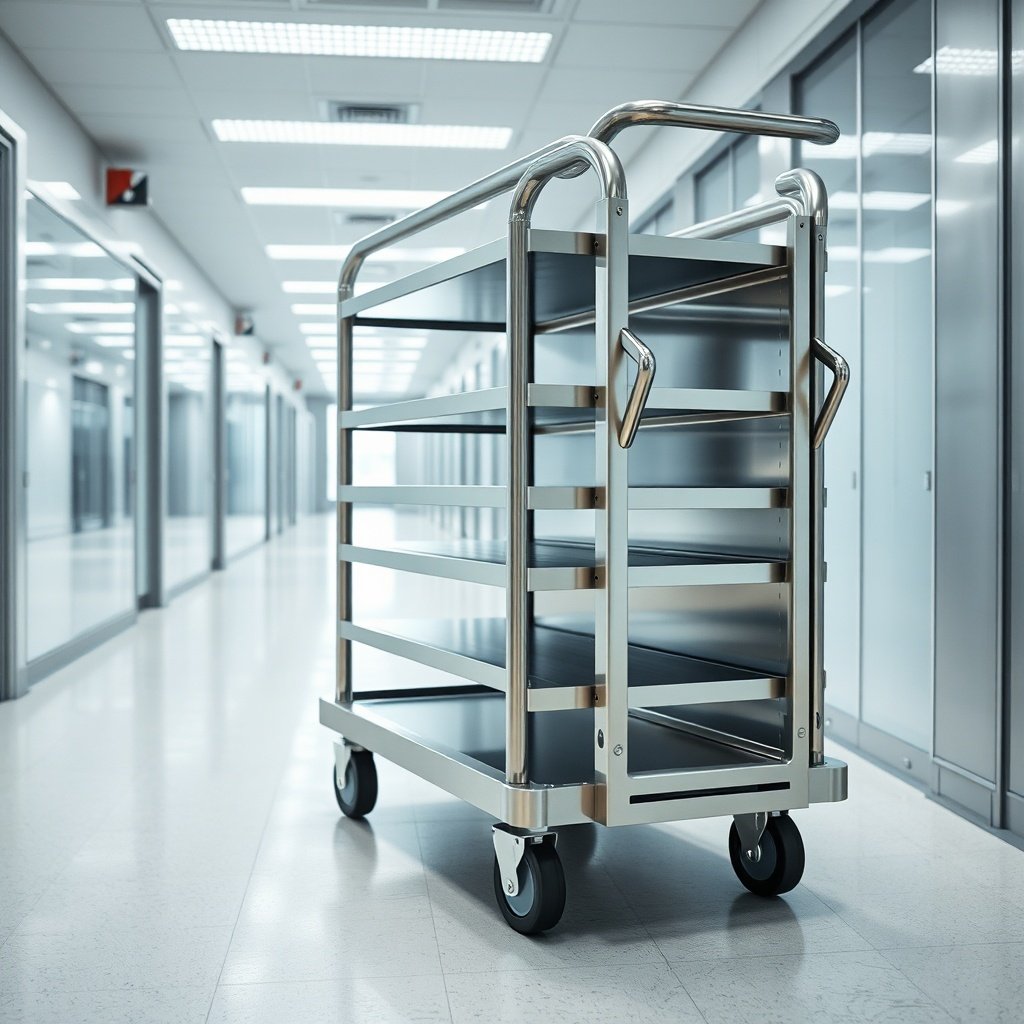
Af ruimwagens: Practical Guide to Choosing, Using, and Maintaining Efficient Unloading Carts
Move more efficiently, stay safer, and keep operations flowing.
In busy logistics, hospitality back-of-house areas, and warehouse service corridors, efficiency isn’t just about moving fast—it’s about moving right. That’s where afruimwagens (service and unloading carts used to collect, transport, and stage items) make a measurable difference. The right cart reduces manual carrying, standardizes how staff handle loads, and helps teams keep aisles clear for faster turnarounds.
This professional guide explains what af ruimwagens are, how to choose the correct model for your environment, and how to build safe, repeatable workflows. You’ll also find practical maintenance guidance to extend lifespan and keep daily operations reliable.
What are afruimwagens?
Afruimwagens are mobile carts designed to support the “remove and transport” step in service and logistics processes. Depending on the setting, they may be used to:
- Collect used items (e.g., plates, trays, containers, or packaging)
- Transport goods or components between workstations
- Stage items for washing, sorting, recycling, or further processing
- Reduce the need for repeated manual trips
While the core purpose is consistent—support efficient unloading and staging—the best cart configuration differs by context. Load weight, floor conditions, traffic flow, and cleaning requirements all influence what “fit” looks like in real operations.
Why afruimwagens matter for operational efficiency
Many organizations invest in new equipment expecting immediate gains. In practice, operational improvement often comes from eliminating small frictions that compound throughout the day. Af ruimwagens address several of those frictions at once:
- Shorter distance and fewer trips: Consolidate transport into one route rather than repeated carry-backs.
- Better workflow consistency: Standardized cart design improves how teams collect, stack, and move loads.
- Reduced handling effort: Lower physical strain can mean fewer slowdowns and fewer injuries.
- Improved aisle management: Dedicated movement paths and predictable staging reduce clutter.
- Higher throughput in peak periods: When demand spikes, a properly sized cart prevents backlog at key points.
Key selection criteria for af ruimwagens
Choosing af ruimwagens is not just about capacity. The “best” cart is the one that matches your daily pattern of use—especially under real-world constraints like narrow aisles, frequent turns, and cleaning cycles.
1) Load capacity and weight distribution
Start with the maximum load you expect in practice, including any dense or bulky items. But capacity alone doesn’t tell the full story. Look for:
- Stable base and low center of gravity to prevent tipping during turning
- Evenly distributed shelving or trays to reduce shifting loads
- Appropriate compartment sizes so items don’t overhang or spill
2) Frame materials and durability
Durability is a major driver of total cost of ownership. Environments with frequent cleaning or harsh chemicals often require corrosion-resistant materials. Common factors to evaluate include:
- Corrosion resistance for wet or wash-down areas
- Structural rigidity to prevent wobble under heavy loads
- Impact tolerance in high-traffic zones
3) Wheel type, caster size, and floor compatibility
Wheels determine how easily a cart moves and how safe it feels for staff. Consider:
- Floor type: smooth tiles vs. industrial flooring vs. uneven surfaces
- Noise and traction: softer wheels for quieter movement; firmer wheels for stability
- Turning radius: critical for narrow corridors and tight corners
- Locking casters: useful for staging and temporary stops
4) Hygiene and cleanability
If the cart supports cleaning loops—such as moving items to wash stations—cleanability is non-negotiable. Look for designs that are easy to wipe, rinse, and dry without trapping residue.
When evaluating hygiene, ask how the cart will be cleaned daily and whether surfaces:
- Have sealed, washable edges
- Avoid crevices where debris accumulates
- Handle repeated exposure to cleaning agents
5) Ergonomics and staff comfort
An efficient cart should also feel controlled. Ergonomic features reduce fatigue and help prevent unsafe handling. Practical checks include:
- Handle height suited to your staff profiles
- Push/pull access that supports one-handed or two-handed control depending on workflow
- Clear sightlines so staff can monitor load stability and surroundings
6) Safety features
Safety is where carts earn their operational value. Evaluate what prevents accidents during movement and staging. Examples include:
- Braking or locking mechanisms during loading/unloading
- Edge protection to reduce sharp-contact risks
- Secure shelving that limits shifting loads
Matching afruimwagens to different use cases
Af ruimwagens appear across many environments, but each brings different requirements. Here are typical scenarios and what “right fit” usually means.
Warehouses and distribution hubs
In warehouse operations, carts often support staging, internal transport, and last-mile movement between workstations. Priorities usually include:
- High maneuverability for aisle circulation
- Robust wheels for warehouse floor conditions
- Quick and safe loading/unloading routines
Hospitality and back-of-house operations
In kitchens, dining service areas, and laundry-adjacent workflows, carts are frequently exposed to moisture and repeated cleaning cycles. Priorities include:
- Hygienic materials and easy-to-clean surfaces
- Compartment layouts that prevent spills
- Reliable mobility during peak service
Healthcare and support facilities
Support carts may be used to move supplies between departments. Priorities typically focus on safe handling and cleanability:
- Stable cart behavior to support controlled movement
- Materials compatible with hygiene procedures
- Clear workflow segregation (clean vs. used items)
Building safer workflows around afruimwagens
A cart alone does not improve operations unless the surrounding workflow supports it. Think in terms of “movement + handling + staging” and standardize each step. For ideas on designing better procedures with smarter systems, you may find relevant guidance in Technology Today: Building Safer Workflows and Smarter Systems.
Step-by-step workflow template
- Assign routes: Define where carts move, where they stage, and how they avoid bottlenecks.
- Standardize loading: Train staff to distribute loads evenly and avoid overfilling.
- Use locking during staging: Once positioned, ensure casters are secured before hands-on handling.
- Minimize turning under load: Reduce abrupt pivots that can shift items.
- Clean on schedule: Implement routine wipe-downs or wash cycles based on contamination risk.
Staff training checklist
Training should be practical and repeated. Consider a short checklist that staff can review before daily use:
- How to check cart stability before loading
- What “maximum fill” looks like for your cart model
- How to move safely around pedestrians and equipment
- How to stage and lock the cart before unloading
- How to report damage (wheels, frames, handles) immediately
Maintenance best practices to extend cart lifespan
Well-maintained af ruimwagens keep daily operations predictable. Maintenance isn’t only about longevity; it’s also about safety. Small issues like worn wheels or loose fittings can turn into operational delays—and they can increase accident risk.
Daily quick checks (2–3 minutes)
- Wheels and casters: Ensure rotation is smooth and there are no cracks or wobble.
- Locks: Confirm locking mechanisms engage reliably.
- Frame stability: Check for bending, loosened bolts, or unusual movement.
- Surface condition: Remove residue buildup to prevent corrosion and hygiene issues.
Weekly or monthly inspection items
Depending on intensity of use, schedule deeper inspections to avoid hidden failures:
- Inspect handles and attachment points for looseness
- Check wheel bearings and axle integrity (as applicable)
- Verify structural integrity and shelf alignment
- Replace damaged components before they cause unsafe behavior
Cleaning and corrosion prevention
Cleaning processes should match the cart’s material. In wet environments, corrosion resistance is essential, and consistent maintenance helps preserve that advantage. Where appropriate, consider aligning cleaning schedules with traffic patterns (e.g., after high-volume service blocks).
How to improve performance with smarter planning
As operations become more data-driven, equipment planning can move from “reactive” to “proactive.” For example, organizations are using automation and intelligent monitoring in related areas like fleet movement and production support—topics that connect with Technology in 2026: How Innovation Shapes Security, Workflows, and Society.
Even if you’re not adopting full automation, you can still improve performance by:
- Tracking usage frequency: Identify carts that are overworked and need replacement or rebalancing.
- Optimizing cart count: Avoid too few carts (bottlenecks) and too many (storage clutter).
- Standardizing sizes: If possible, reduce the variety so staff can learn predictable handling.
- Reducing downtime: Keep spare parts like replacement wheels or common fasteners.
Common mistakes when buying or using afruimwagens
Even well-intentioned purchases can underperform if certain factors are overlooked. Watch for these frequent pitfalls:
- Choosing capacity without checking floor travel: Heavy carts that don’t roll well create delays and fatigue.
- Ignoring turning radius: A cart that fits on paper may struggle in real aisles.
- Overlooking cleanability: Difficult-to-clean surfaces can turn into hygiene risk.
- Skipping safety locks or proper staging: Many incidents happen during stop-and-unload moments.
- Waiting for visible damage: Worn wheels or loose joints often start subtle and worsen quickly.
Af ruimwagens and the idea of “fit” in systems
Efficiency improves when equipment aligns with human needs and operational design. That concept is closely related to broader discussions of “fit” across health, work, and digital systems. If you want a framework for thinking about alignment between people, tasks, and tools, consider Fit for Performance and Design: A Modern Guide to “Fit” in Health, Work, and Digital Systems.
In practice, fit for afruimwagens means choosing a cart that your staff can move comfortably, handle confidently, and clean reliably—day after day.
FAQ: Af ruimwagens
How many af ruimwagens do we need for smooth operations?
The ideal number depends on peak load, route lengths, and staging times. A practical approach is to observe peak periods and measure how long carts spend moving vs. waiting. If carts are frequently idle, you may have too many; if carts queue up, you likely need more capacity or better workflow staging.
What should we prioritize for wheel selection?
Prioritize wheel type based on floor condition and maneuverability. Smooth-rolling wheels reduce effort, but they must also provide traction and stability for your specific environment—especially when staff turn under load or stage quickly.
Are afruimwagens suitable for repeated cleaning cycles?
Yes, when chosen with cleanability in mind. Look for corrosion-resistant materials and designs that are easy to wipe and rinse. If your process uses strong detergents or wash-down procedures, confirm material compatibility before purchase.
What maintenance tasks are most important?
Start with wheels/casters, locking mechanisms, and frame stability checks. These directly affect safety and reliability. Then maintain hygiene by cleaning according to your environment’s requirements and preventing corrosion through consistent upkeep.
Conclusion
Afruimwagens are more than simple carts—they’re workflow infrastructure. When selected carefully for load stability, wheel performance, cleanability, and ergonomics, these carts reduce friction and improve day-to-day throughput. Just as importantly, maintenance and standardized procedures keep operations safe and predictable over time.
Use this guide as a checklist: match capacity to real tasks, confirm mobility on your floors, build safer handling steps, and inspect frequently. With the right approach, af ruimwagens help teams move efficiently—so the rest of the operation can stay focused, responsive, and ready for peak demand.