Feedbuzzard Tech: Building Smarter Feeds, Safer Automation, and 2026-Ready Workflows
Turn data streams into dependable, intelligent feed experiences.
Modern digital experiences are increasingly shaped by “feeds”—continuous streams of updates, recommendations, notifications, and curated content. But as soon as you scale beyond a handful of sources, feed operations become complex: you must collect data, normalize formats, handle duplicates, validate quality, and deliver results in near real time without breaking reliability or compliance.
This is where feedbuzzard tech enters the conversation. In practice, “feedbuzzard tech” refers to the applied approach to designing intelligent feed workflows—combining ingestion, processing, routing, monitoring, and optimization into a system that behaves predictably even when upstream sources are noisy. Below, we’ll unpack what this tech strategy is, why it matters, and how to implement it thoughtfully for 2026-ready operations.
What Is Feedbuzzard Tech?
Feedbuzzard tech isn’t just a single tool; it’s a set of ideas and engineering patterns for building feed-driven systems. Think of it as the “operating philosophy” for feed pipelines: automate the handling of many inputs while preserving data quality, enabling governance, and creating clear observability.
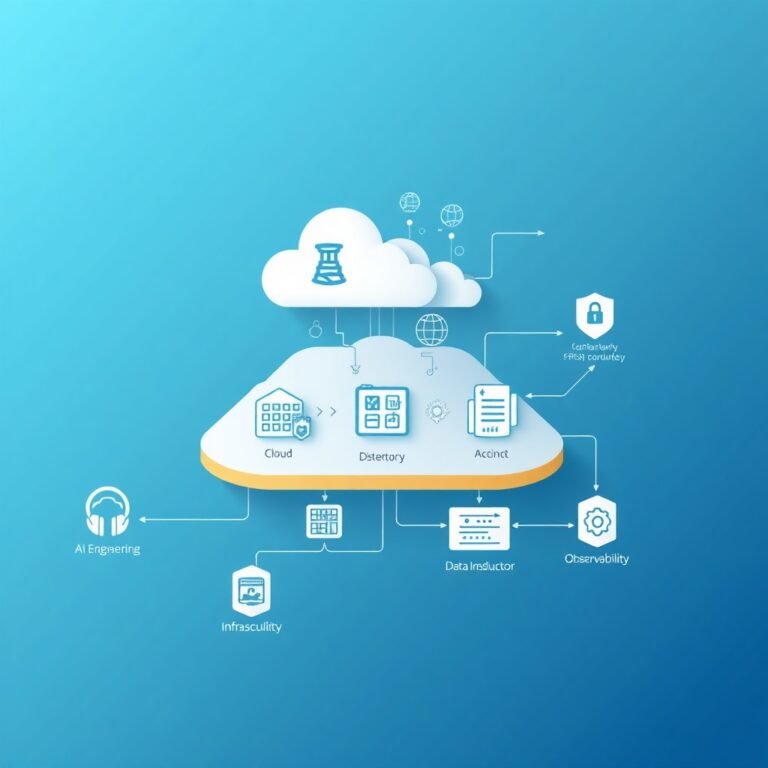
A well-designed feedbuzzard-style architecture typically includes:
- Ingestion from multiple endpoints (APIs, webhooks, file drops, event streams)
- Normalization into a consistent schema so downstream logic stays stable
- Validation and deduplication to prevent drift and repeated delivery
- Enrichment (metadata, classification, tagging, scoring)
- Routing and delivery to the correct destinations (apps, databases, partner APIs, notification systems)
- Monitoring and feedback loops to detect failures, latency spikes, or quality regressions
Why Feed Workflows Fail (and How Feedbuzzard Tech Fixes It)
Feed systems often break in predictable ways. Understanding those failure modes helps you design for resilience instead of reacting after the fact.
Common feed workflow problems
- Schema changes from upstream sources that silently break transformations.
- Duplicate events caused by retries, overlapping crawls, or webhook replays.
- Latency creep where queues grow and updates arrive late—sometimes for specific feeds only.
- Inconsistent quality where some items are enriched while others are incomplete.
- Poor observability that makes it difficult to pinpoint which stage introduced errors.
Feedbuzzard tech principles that reduce risk
Instead of treating feeds as a “best-effort” pipeline, feedbuzzard tech emphasizes operational discipline:
- Schema contracts and compatibility strategies so changes don’t cascade.
- Idempotency so repeated events don’t create repeated outputs.
- Quality gates that block or quarantine problematic items.
- Stage-based metrics that show where time and errors accumulate.
- Feedback loops that learn from failures (and prevent repeat incidents).
When you combine these principles, you get feed pipelines that are easier to maintain, safer to operate, and simpler to scale.
Core Components of a Feedbuzzard-Style Architecture
Whether your system is built using cloud services, on-prem infrastructure, or a hybrid stack, you can model your solution using the same core components.
1) Feed ingestion layer
This is where updates enter your system. A feedbuzzard approach treats ingestion as a controlled interface:
- Use clear connector types (API polling, webhook listeners, batch imports, event ingestion).
- Capture raw payloads (at least temporarily) for debugging and replay when needed.
- Record ingestion metadata such as source identity, capture time, and request identifiers.
2) Normalization and schema management
Normalization converts different source formats into a unified internal representation. In stable feed operations, this internal schema becomes a contract your downstream logic can rely on.
- Implement mapping rules from each source’s fields to canonical fields.
- Track schema versions so you can support transitions safely.
- Gracefully handle missing fields using defaults or enrichment fallbacks.
3) Validation, deduplication, and data quality gates
Feed pipelines should never assume every incoming item is correct. Feedbuzzard tech favors explicit quality checks:
- Validation: required fields, type checks, range checks, and format constraints.
- Deduplication: idempotency keys, content hashes, or event IDs.
- Quarantine: store invalid items separately for review and reprocessing.
4) Enrichment and classification
Once data is clean, enrichment improves usefulness. This can include tagging, category classification, entity linking, or deriving attributes used by ranking and routing rules.
If your enrichment uses machine learning or rules engines, make quality measurable: track confidence thresholds, drift, and the rate of enrichment failures.
5) Routing, delivery, and destination management
Delivery isn’t only “sending data somewhere.” It’s selecting what to send, when to send it, and how to guarantee compatibility with each destination.
- Route items by type, audience, region, or priority.
- Support multiple output formats without fragmenting logic.
- Implement retries with backoff and clear dead-letter handling.
6) Observability and monitoring
Successful feedbuzzard tech systems are visible. Build dashboards and alerts that cover the whole pipeline:
- Volume (items in, items processed, items delivered)
- Latency (time in queue, time per stage, end-to-end delay)
- Quality (validation pass rate, enrichment success rate)
- Reliability (retry counts, failure categories)
If you want a practical perspective on building safer systems and workflows, you can also reference Technology Today: Building Safer Workflows and Smarter Systems.
Designing for Reliability: Idempotency, Retries, and Backpressure
Feed systems operate in imperfect environments. Networks fail. Sources behave inconsistently. Queues fill. Reliable feedbuzzard tech design anticipates these realities.
Idempotency: the backbone of duplicate-safe delivery
Idempotency means that processing the same event twice does not change the outcome. Common approaches include:
- Using a stable event ID or composite key (source + item ID + timestamp bucket)
- Storing processed keys in a fast lookup layer
- Making delivery updates “upserts” rather than blind inserts
Retries: controlled recovery, not endless loops
Retries should be bounded and categorized. A good feedbuzzard workflow distinguishes transient vs. permanent errors:
- Transient: timeouts, temporary 5xx responses, network interruptions
- Permanent: invalid payloads, schema mismatches, authentication failures
Bound retries with backoff to avoid thundering herds, and route permanent failures to quarantine or a dead-letter queue.
Backpressure: keep the system stable under load
Backpressure prevents one stage from overwhelming another. In feedbuzzard tech terms, it means:
- Set queue limits and monitor saturation
- Use rate limiting per source connector
- Scale consumers independently from producers
Quality Governance: Making Feeds Trustworthy
Feeds often become the “source of truth” for downstream experiences. That’s why feedbuzzard tech treats governance as a first-class concern, not an afterthought.
Quality gates and acceptance criteria
Define what “good” looks like before you deliver items:
- Mandatory fields present and valid
- Allowed values within defined ranges
- Consistency checks between related fields (e.g., category and tags)
- Enrichment coverage targets (e.g., minimum confidence for classification)
Versioning and compatibility
As you evolve transformations, you want predictable behavior:
- Version your enrichment logic and mapping rules
- Publish schema compatibility notes for downstream consumers
- Support dual-writing during migrations if needed
Auditability and traceability
Operational safety improves when you can trace outcomes back to inputs. Maintain metadata such as:
- Source ID and ingestion timestamp
- Transformation version used
- Validation results and error reasons (if quarantined)
- Delivery destination identifiers
For organizations building broader tech ecosystems, it can also help to align feed governance with wider innovation goals—see Technology in 2026: How Innovation Shapes Security, Workflows, and Society.
Security Considerations in Feedbuzzard Tech
Feed pipelines can expose sensitive data if not secured. A professional feedbuzzard strategy includes security at every layer.
Secure data handling
- Encryption in transit between connectors and pipeline stages.
- Encryption at rest for raw payload storage and quarantine areas.
- Least privilege access controls for each stage.
Authentication and request integrity
Implement secure authentication for webhooks and API ingestion. Also ensure integrity protections where appropriate (e.g., signature verification for webhooks) to prevent spoofed events.
Operational safety for automation
Automation is powerful, but it can propagate issues quickly. Use safety controls such as:
- Rate limiting and permission checks
- Feature flags for new transformations
- Rollbacks that can revert delivery rules without disrupting ingestion
Performance Optimization: Keeping Feeds Fast and Cost-Controlled
Performance isn’t only about speed—it’s also about efficient resource usage and predictable costs.
Optimize transformations and enrichment
- Cache stable reference data used by enrichment steps
- Minimize expensive operations in hot paths
- Use streaming where it fits and batching where it reduces overhead
Choose the right processing model
Feedbuzzard tech commonly uses a mix of processing styles:
- Streaming for near-real-time updates
- Micro-batching for throughput-friendly processing
- Batch reprocessing for backfills, schema migrations, or model updates
Track end-to-end service level indicators
Instead of optimizing only individual stage metrics, measure the full pipeline experience: ingest-to-deliver time, percent delivered within target windows, and the distribution of delays by source.
If your feed strategy overlaps with campaign execution and delivery logic, you can explore Feedbuzzard Advertise: A Professional Guide to Smart Campaigns in 2026 for additional operational thinking around structured delivery.
Implementation Roadmap: From Prototype to Production
To implement feedbuzzard tech effectively, proceed in phases. This reduces risk and ensures each stage is verifiable.
Phase 1: Discovery and requirements
- List all sources, destinations, and expected update frequency.
- Define the canonical schema and normalization rules.
- Establish quality criteria and what happens to invalid items.
Phase 2: Build ingestion and a normalization MVP
- Create a connector for your top priority source.
- Implement schema mapping to the canonical format.
- Add basic logging and stage-level metrics.
Phase 3: Add validation, deduplication, and quarantine
- Introduce idempotency keys and duplicate-safe delivery behavior.
- Implement validation logic with clear error categories.
- Set up quarantine storage and reprocessing workflows.
Phase 4: Enrichment, routing, and destination compatibility
- Integrate enrichment logic with confidence tracking.
- Implement routing rules and destination payload formatting.
- Add retry policies and dead-letter handling.
Phase 5: Observability, governance, and continuous improvement
- Create dashboards for volume, latency, quality, and reliability.
- Set alert thresholds that map to actionable incidents.
- Run periodic audits on quarantined data and schema drift.
If you also operate in environments where intelligent automation is spreading across domains, it may be helpful to compare feed safety patterns with broader AI-driven operations—see AI Drones: How Artificial Intelligence Is Redefining Flight, Safety, and Operations.
Use Cases for Feedbuzzard Tech
Feedbuzzard tech fits any scenario where continuous updates must be transformed and delivered reliably. Here are common use cases:
- Content aggregation: normalize posts, articles, and metadata from multiple sources into a unified reading experience.
- E-commerce catalog feeds: standardize products, handle variants, and ensure accurate inventory or pricing updates.
- Recommendation and personalization: enrich events and route them into ranking pipelines.
- Monitoring and alerting: transform logs/events into notifications with quality checks and deduplication.
- Partner integrations: deliver structured updates under schema and compatibility controls.
Looking Ahead: Feedbuzzard Tech Trends for 2026
As systems get more automated, feed pipelines will need stronger governance, better performance control, and clearer feedback mechanisms. One direction is increasingly data-driven operations—where monitoring doesn’t just alert teams, but helps guide automated remediation.
Another trend is the expansion of “feed thinking” into adjacent tech: from campaign delivery to analytics and operational safety. For a broader view of feedbuzzard-related tech highlights approaching 2026, consider Feedworldtech World Techie News: Feedbuzzard-Driven Tech Highlights for 2026.
Conclusion
Feedbuzzard tech is a professional approach to designing feed pipelines that stay dependable as volume, variety, and complexity grow. By combining careful ingestion, normalization, quality gates, idempotent processing, robust routing, and full observability, you can turn chaotic source data into trustworthy outputs.
Most importantly, feedbuzzard tech shifts feeds from “best-effort content streams” into measurable systems with governance and operational safety. If you build with reliability in mind—deduplication, schema compatibility, and monitoring—you’ll be positioned to scale confidently into 2026 and beyond.
FAQ
Is feedbuzzard tech the name of a specific product?
Generally, it describes an architectural and operational approach to feed pipelines—rather than a single software product.
What is the biggest technical challenge in feed pipelines?
Many challenges come from upstream inconsistency: schema drift, duplicates, and variable update timing. Feedbuzzard-style design addresses these with normalization, validation, idempotency, and observability.
How do quality gates help feed reliability?
Quality gates prevent low-quality or malformed items from entering downstream systems, reducing unexpected behavior and making failures easier to diagnose via quarantine and error categorization.
How can teams reduce feed-related outages?
Use